
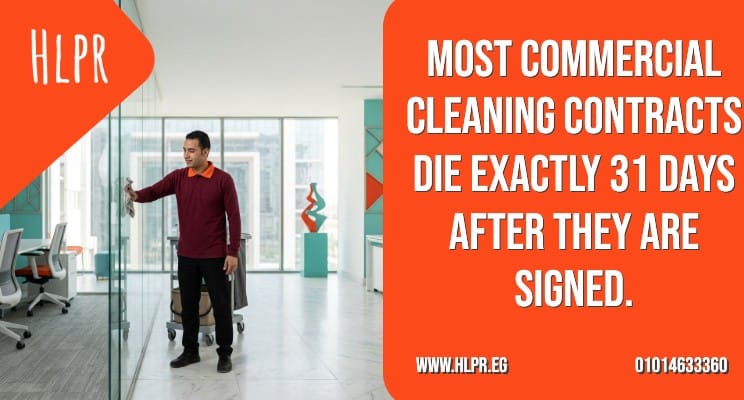
Most commercial cleaning contracts die exactly 31 days after they are signed.
The first month is a performance. The supervisor is on-site every day, the glass partitions are streak-free, and the meeting rooms in the New Cairo office tower actually smell clean.
Then, “Operational Decay” sets in.
The supervisor stops showing up. The cleaners start cutting corners because they know no one is checking the high shelves or the skirting boards. By month three, you’re paying full price for 50% of the effort.
In B2B service, the sale is just the entry ticket. The real profit—and the real brand reputation—is built in the “boring” middle of the contract.
If you are managing an office or a commercial site, consistency is usually killed by three things:
• The “Set and Forget” Mentality: The provider moves their best talent to the newest client, leaving you with the “B-team.”
• Lack of Layered Supervision: If the person checking the work is the same person doing the work, the work isn’t being checked.
• Invisible Feedback Loops: If you have to call the provider to tell them the trash wasn’t emptied, their internal system has already failed.
At HLPR, we’ve found that growth doesn’t come from aggressive sales; it comes from operational paranoia. We assume the quality will drop and build audits to catch it before the client does.
If you can’t deliver the same quality on Day 300 as you did on Day 1, you don’t have a business—you have a temporary gig.
Have you noticed a sharp dip in service quality once the “honeymoon phase” of a new contract ends, or have you found a provider that actually stays consistent?
#operations #facilitiesmanagement #b2b
