
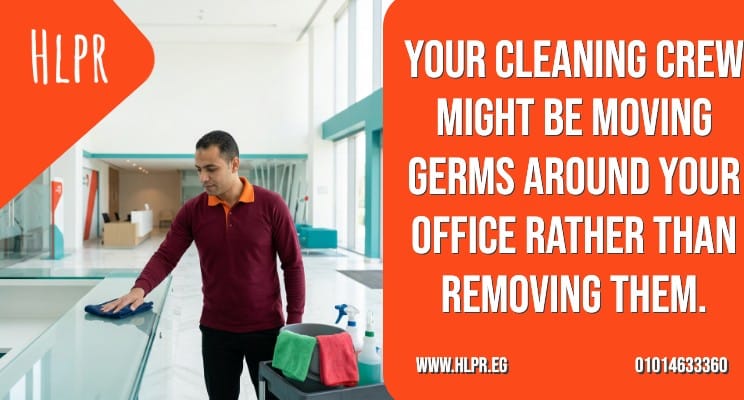
Your cleaning crew might be moving germs around your office rather than removing them.
A shiny lobby doesn’t mean a workspace is healthy; it often just means it’s been polished with the wrong protocols.
I’ve walked into administrative towers where the same cloth used in the restroom was used to wipe down the boardroom table ten minutes later.
In the B2B world, we call this a “hidden operational tax.”
It doesn’t show up on your cleaning invoice. It shows up in your HR reports as a 15% spike in absenteeism during flu season or as a hefty compliance fine during a health audit.
If your facility management team isn’t enforcing strict cross-contamination protocols, they aren’t cleaning—they’re just redistributing risk.
At HLPR, we look at hygiene as a business continuity strategy. Here is the baseline for any professional setup:
* **Zonal Color-Coding:** Microfiber cloths must be color-coded (e.g., Red for restrooms, Blue for desks, Green for pantries). If you see a blue cloth in a bathroom, your protocol is broken.
* **Chemical Dwell Time:** Most disinfectants require 3-5 minutes of “sit time” to actually kill pathogens. Spray-and-wipe-instantly is just theater.
* **High-Touch Audits:** Doorknobs, elevator buttons, and shared printer screens require 4x the attention of a floor tile.
A cheaper cleaning contract is never worth the cost of half your workforce calling in sick on the same Monday.
How often do you actually audit your cleaning vendor’s color-coding and chemical usage during an unannounced site visit?
#operations #facilitiesmanagement #hygiene
