
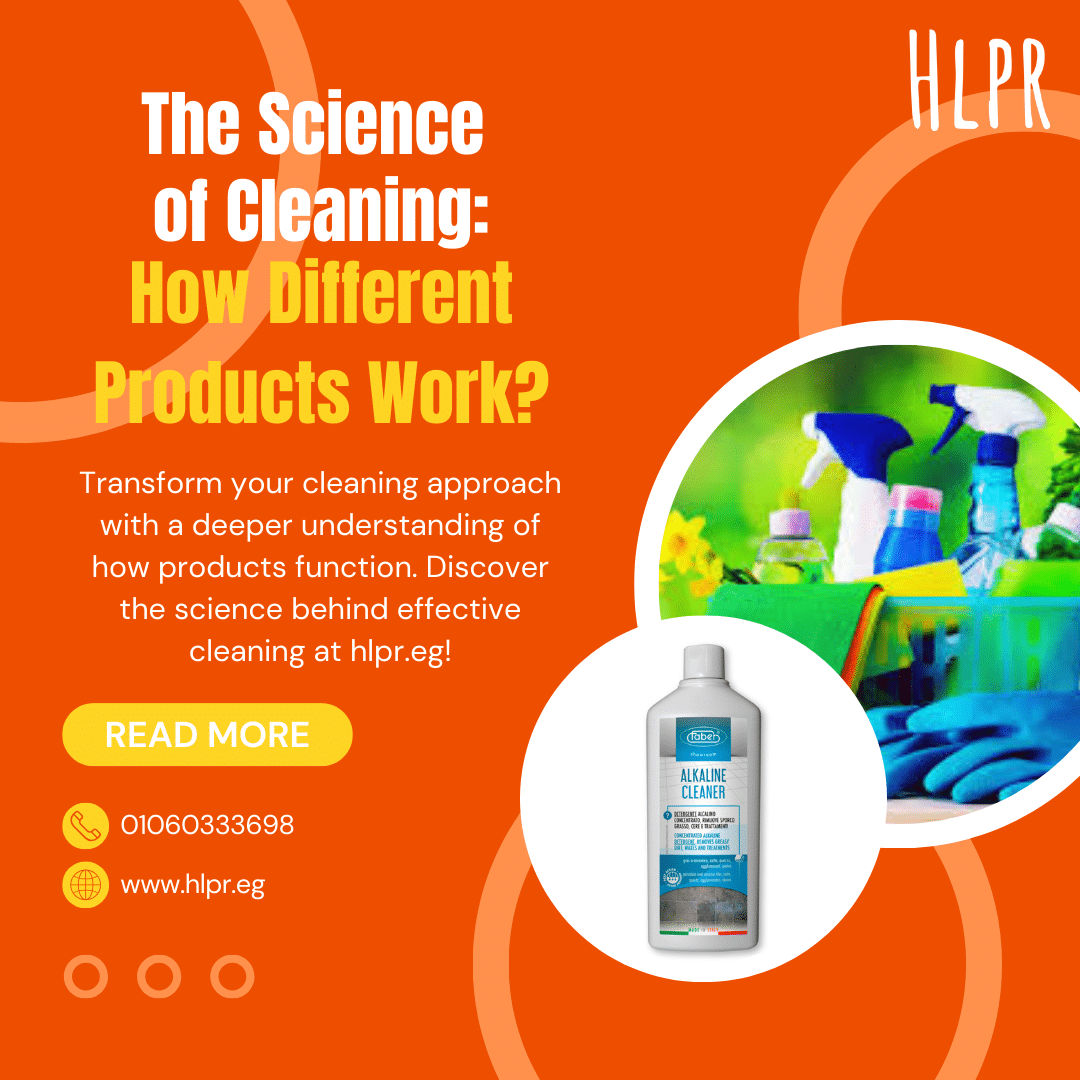
Cleaning products are an essential part of maintaining hygiene and aesthetics in our daily lives. The products we use for cleaning are formulated with specific ingredients designed to tackle various types of dirt, stains, and microbes. Understanding the science behind these products can enhance our cleaning effectiveness and help us make informed choices. Here, we explore the main categories of cleaning products and how they work.
محتويات المقال
1. Detergents
Detergents are perhaps the most commonly used cleaning products, primarily in laundry and dishwashing. Unlike soap, which is derived from natural fats and oils, detergents are synthetic molecules designed to work in hard water and have superior cleaning power.
How They Work:
– Surfactants: Detergents contain surfactants that lower the surface tension of water, allowing it to spread and penetrate more effectively. This action helps lift dirt and oils away from surfaces.
– Emulsifying Agents: These ingredients help mix oil and water, allowing for the removal of greasy stains.
– Enzymes: Many detergents also include enzymes that break down protein-based stains (like blood and grass) and starches, enhancing stain removal.
2. Disinfectants
Disinfectants are essential for killing pathogens on surfaces, making them crucial in environments like hospitals and kitchens. Common active ingredients include bleach (sodium hypochlorite), alcohol, quaternary ammonium compounds, and hydrogen peroxide.
How They Work:
– Oxidation: Chemicals like bleach and hydrogen peroxide release oxygen that disrupts the cellular structure of microbes, effectively killing them.
– Cell Membrane Disruption: Alcohol-based disinfectants dissolve the lipid membranes of bacteria and viruses, providing a rapid way to reduce microbial load.
3. Acidic Cleaners
Acidic cleaners are often used for descaling and removing mineral deposits, such as limescale buildup in bathrooms and kitchens. Common acids found in cleaning products include citric acid, acetic acid (vinegar), and phosphoric acid.
How They Work:
– Dissolving Mineral Deposits: Acids neutralize the alkaline compounds found in hard water deposits, breaking them down into soluble materials that can be wiped away easily.
– pH Adjustment: By changing the pH of a surface, acidic cleaners can enhance the effectiveness of additional cleaning agents or simply make the surface more hygienic.
4. Alkaline Cleaners
Alkaline cleaners are effective at breaking down organic materials, such as fats, oils, and grease. They are commonly found in oven cleaners and floor detergents.
How They Work:
– Saponification: Alkaline cleaners promote a reaction called saponification, where fats are converted into soap, allowing for easier removal from surfaces.
– Breaking Chemical Bonds: Alkaline substances can break chemical bonds in proteins and fats, making it simpler to clean surfaces heavily coated with grime.
5. Solvent Cleaners
Solvent-based cleaners are used for removing tough stains, adhesives, and paint. Common solvents include acetone, mineral spirits, and isopropyl alcohol.
How They Work:
– Dissolving Power: Solvents work by dissolving greasy and oily substances. Their small molecular size allows them to penetrate into the stains or residues and break them apart for easier cleaning.
Conclusion
The science behind cleaning products emphasizes the importance of selecting the right product for the job at hand. Understanding how different cleaners work can help optimize their effectiveness and ensure a healthier environment. Whether you choose detergents, disinfectants, acidic or alkaline cleaners, or solvents, knowing their mechanisms can lead to more informed cleaning habits and better results. Always remember to follow safety instructions and consider the impact of chemicals on health and the environment when selecting cleaning products.
